In recent weeks, the governing state of Myanmar has been called out by the international community for its mass genocide of Rohingya Muslims in the country.
The Myanmar military, reportedly, began attacking Rohingya Muslim villages at the beginning of September causing villagers to flee their homes and the country. The military reportedly violated the UN’s human rights charter: using unnecessary violence and sexual violence against villagers, indiscriminate firing of weapons on a people and presence of land mines. Neighboring nations, primarily Bangladesh, has since received an influx of over 500,000 Rohingya Muslims, who have taken shelter in refugee camps. The World Health Organization (WHO) and Bangladeshi officials agreed that the camps have long been over capacity. Fadela Chailb, a WHO spokesperson said that the committee fears that the greatest threat to the settlements are water and sanitation related concerns.
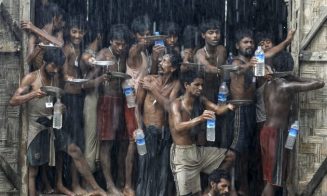
“[The WHO] is very concerned about the health situation on the border between Myanmar and Bangladesh, given the very crowded settlements, most of them spontaneous,” said Chaib.
The UN has been discussing possible approaches to addressing genocides but has been unsuccessful in coming to a decision on one, which has left the assembly somewhat frustrated and unprepared.
The Guardian reports that the UN, which has been Myanmar’s largest critic, “commissioned and then ‘suppressed’ a report” that suggested that the UN was ill-prepared to handle the rising crisis in Myanmar in May, which appears more true now that the assembly has done little more than criticize the country and cater to the refugee population in Bangladesh. The United Nation’s top human rights official called the events in the Myanmar “a textbook case of ethnic cleansing,” reports the Times.
In his remarks to the Security Council September 28, the UN Secretary General António Guterres said “The reality on the ground demands action — swift action — to protect people, alleviate suffering, prevent further instability, address the root causes of the situation and forge, at long last, a durable solution…” He said the situation has deteriorated since the attacks led by the Arakan Rohingya Salvation Army against Myanmar security on the 25, but admitted that “the situation has spiraled into the world’s fastest developing refugee emergency and a humanitarian and human rights nightmare.”
He reaffirmed his position on the situation and called Myanmar authorities to cease military operations , allow unfettered access for humanitarian support to the affected areas and ensure safe and dignified return of the refugees to their homes. But in his opening statement it was clear that the UN needs a sustainable response to this crisis and future ones, should they arise. The attacks against the Rohingya are being perpetrated by the Buddhist-majority in Myanmar, led by Buddhist monks.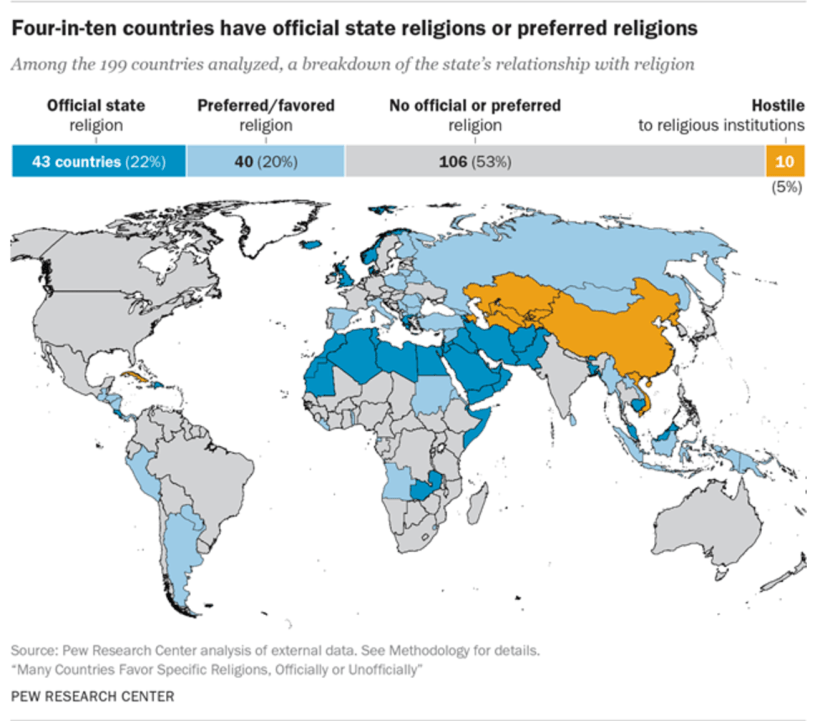
A Pew Research Study concluded that four-in-ten countries have an official state or preferred religion. Among the countries identified as having a preferred religion, Myanmar made the list. It was bookended on its left and right by the indiscriminate India and Bangladesh.
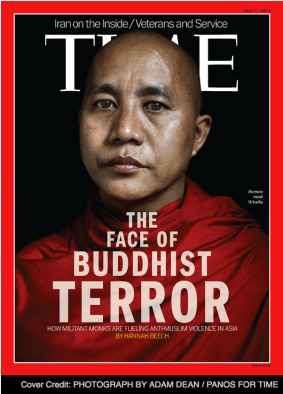
In June, TIME magazine hosted the face of U Wirathu on its cover and in the article addressing rising extremist Buddhist violence against Muslims, Hannah Beech wrote:
“In the reckoning of religious extremism — Hindu nationalists, Muslim militants, fundamentalist Christians, ultra-Orthodox Jews — Buddhism has largely escaped trial. To much of the world, it is synonymous with nonviolence and loving kindness, concepts propagated by Siddhartha Gautama, the Buddha, 2,500 years ago… [but] now it’s Buddhism’s turn.”
 glennepps.com